Budget and prices
What a vacuum costs per year in Canada, filters and batteries included
Five lines turn a $650 sticker into a yearly figure: the tax the till adds, the machine over five years, filters, a brush roll, a battery and electricity.
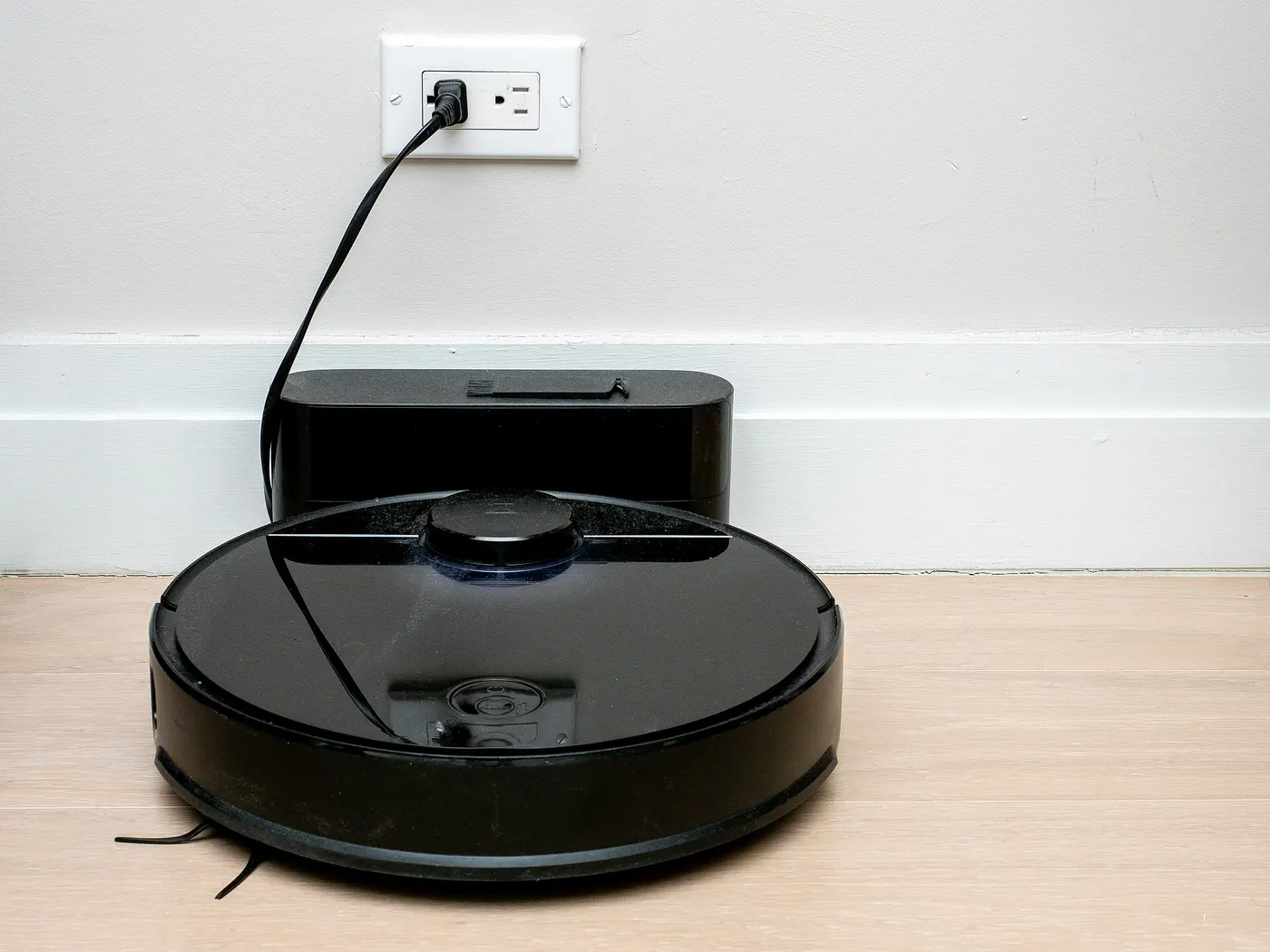
A vacuum's price tag covers about 64% of what it will cost you. The rest arrives in small amounts over years: filters, a brush roll, a battery that fades in year three, and a trivial amount of electricity.
This guide puts all five lines on one page and shows every division. The $650 starting price and the consumable prices below are examples chosen to make the arithmetic readable; this site carries no price feed and quotes nothing.
The till price, province by province
Canadian shelf labels are pre-tax, because the rate belongs to the province of supply rather than to the product. The federal GST is 5% everywhere. Five provinces fold their share into a single harmonized rate and four charge a separate provincial tax on top.
The Canada Revenue Agency publishes the current combination: 13% in Ontario, 14% in Nova Scotia since 1 April 2025, and 15% in New Brunswick, Newfoundland and Labrador, and Prince Edward Island, with separate provincial taxes of 6% in Saskatchewan, 7% in British Columbia and Manitoba, and a 9.975% QST in Quebec.
On a $650 machine that is a $65 spread between the cheapest and most expensive counter in the country. It is roughly two years of filters on the figures below, which is the useful way to see how large the tax line is.
| Where you buy | Rate applied | Tax on $650 | Total at the till |
|---|---|---|---|
| Alberta, NT, NU, YT | 5% GST | $32.50 | $682.50 |
| Saskatchewan | 5% GST + 6% PST | $71.50 | $721.50 |
| British Columbia, Manitoba | 5% GST + 7% PST | $78.00 | $728.00 |
| Ontario | 13% HST | $84.50 | $734.50 |
| Nova Scotia | 14% HST | $91.00 | $741.00 |
| Quebec | 5% GST + 9.975% QST | $97.34 | $747.34 |
| New Brunswick, NL, PEI | 15% HST | $97.50 | $747.50 |
Tax column is $650 multiplied by the combined rate; total is $650 plus that figure. The rest of this guide uses the Ontario total of $734.50.
Consumables are the half of the bill nobody prices
Take the Ontario total of $734.50 over 5 years: that is $146.90 a year of machine. Now add the parts that wear. Two filters a year at $18 each is $36.00. A brush roll every 2 years at $45 is $22.50 a year. A replacement battery at year three costing $120 is $24.00 a year spread across the same five years.
Those three lines come to $82.50 a year, which is 56% of the machine's own annual figure. Nobody puts them on the shopping list, and together they are the difference between a machine that still works in year five and one that is quietly running at half its original pickup.
The numbers move with the design, which is why they belong in the comparison before purchase rather than after. A washable lifetime filter removes the $36.00 line. A bagged machine adds a bag line of $40 a year or so. A sealed battery that cannot be replaced removes the $24.00 line and replaces it with a new machine in year four.
| Line | How it is worked out | Cost per year |
|---|---|---|
| Machine | $734.50 divided by 5 years | $146.90 |
| Filters | 2 a year at $18 each | $36.00 |
| Brush roll | 1 every 2 years at $45 | $22.50 |
| Battery | 1 at year 3 at $120, spread over 5 years | $24.00 |
| Electricity | 11.7 kWh a year at an assumed 15 cents | $1.76 |
| Total | Sum of the five lines above | $231.16 |
All component prices are illustrations used to show the method. Replace each with the figure on the manufacturer's own parts page for the model you are considering.
Electricity is the smallest line, and you can compute it exactly
A corded vacuum rated at 450 watts, run for 30 minutes a week, uses 0.225 kWh a week and 11.7 kWh a year. At an assumed 15 cents per kWh that is $1.76 a year, which is less than one filter.
Rates differ more than anything else in this calculation. The Canada Energy Regulator's residential electricity bill report sets out each jurisdiction's structure, with energy charges running from 8.740 cents per kWh in Manitoba to 58.56 cents per kWh in Nunavut; those figures are drawn from 2019 and 2020 filings, so your own bill is the better input.
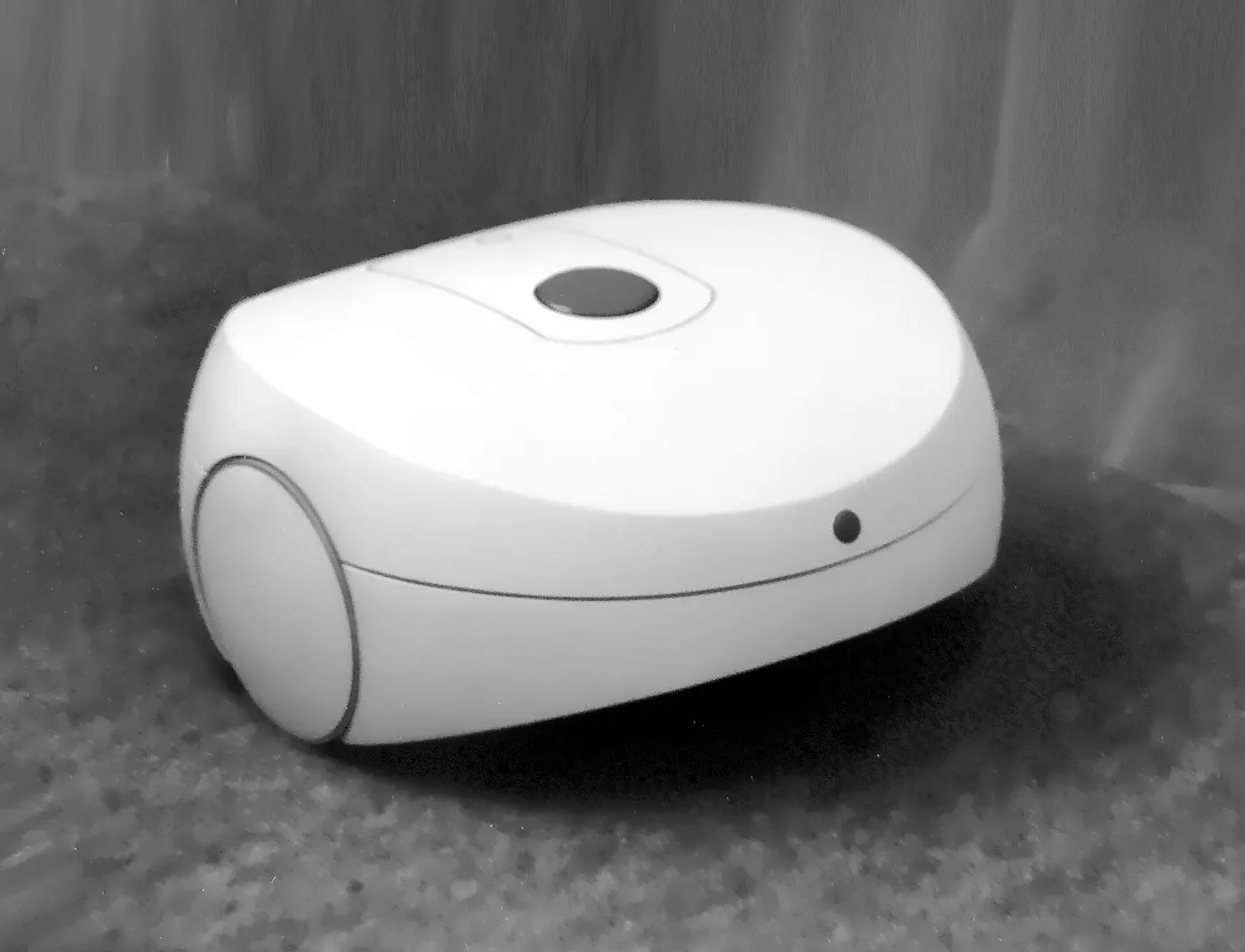
Put the same 11.7 kWh through all three and the answer is between $1.02 and $6.85 a year. A robot that consumes about 0.08 kWh a cycle and runs 5 times a week uses 20.8 kWh a year, which is $3.12 at the assumed 15 cent rate. Neither figure will change a purchase decision, and that is the point of computing it.
| Machine and pattern | kWh per year | At 15 cents per kWh |
|---|---|---|
| 450 W corded, 30 minutes a week | 11.7 kWh | $1.76 |
| 450 W corded, 90 minutes a week | 35.1 kWh | $5.27 |
| Robot at 0.08 kWh a cycle, 5 cycles a week | 20.8 kWh | $3.12 |
| Robot at 0.08 kWh a cycle, 14 cycles a week | 58.2 kWh | $8.73 |
Rated power is a maximum and a motor under varying load draws less, so a plug-in meter usually reads lower than this arithmetic. There is no EnerGuide or ENERGY STAR category for vacuums, so the plate is the only published figure.
Putting the five lines together
On the example figures, $231.16 a year. Divided by 365 days that is about $0.63 a day. Divided by 104 cleans — twice a week — it is $2.22 a clean.
The ranking is stable across almost every household: machine first at 64% of the total, consumables second at 36%, electricity last at under 1%. That means the two levers worth pulling are the number of years you keep the machine and the price of the parts that wear, in that order.
Keeping the same machine 8 years instead of 5 drops the machine line from $146.90 to $91.81 a year and the total to $176.07, a reduction of 24%. Nothing about the cleaning changed. The cost-per-year calculator on this site takes your own years, parts and rate and prints the same five lines.
- Machine: $146.90 a year, 64% of the total
- Filters, brush roll and battery: $82.50 a year, 36%
- Electricity: $1.76 a year, under 1%
- Total: $231.16 a year, about $0.63 a day
- At 2 cleans a week: $2.22 a clean
What changes the answer most, and what a sale price is worth
Three things move this total: the years, the parts availability, and whether the battery is replaceable. A machine that cannot be opened has a hard stop at the end of its battery's life, and that stop is usually somewhere between year three and year five.
Sale pricing deserves one check. The Competition Bureau's guidance on deceptive marketing practices says a regular price should not be advertised unless the product has been offered in good faith at that price for a substantial period, or a substantial volume has been sold at it. A struck-through figure that has never been a real selling price is precisely what that rule addresses.
For context on the general direction of prices, Statistics Canada reported that the Consumer Price Index rose 3.1% year over year in September 2026. That is the all-items figure rather than an appliance-specific one; the release does not break out small household equipment in its summary.
Before you buy
- Add your own province's combined rate to the shelf price before comparing machines
- Open the manufacturer's parts page and write down the filter, brush and battery prices
- Confirm the battery is sold as a replaceable part
- Decide how many years you intend to keep the machine and divide by that
- Read the rated power from the machine's plate for the electricity line
- Use your own electricity rate from a bill rather than a national figure
- Check whether an advertised regular price has genuinely been a selling price
Questions readers ask
- Is a cheap vacuum a false economy?
- It depends entirely on the parts. A $250 machine with no replaceable filter or brush roll, discarded after 3 years, costs $94.17 a year at Ontario's 13% once tax is added. The $734.50 machine kept 8 years with parts costs $176.07 a year including consumables. The cheap one wins on cost per year and loses on everything the parts line protects.
- How often do filters really need changing?
- Washable pre-filters want rinsing every 2 to 4 weeks and drying fully before refitting; sealed post-motor filters are usually specified for 6 to 12 months. The two-a-year figure used in this guide sits in the middle of that range. A filter left past its interval reduces airflow, which shows up as a machine that seems to have lost suction.
- Is it worth replacing a battery rather than the machine?
- On these figures, yes, by a wide margin. A $120 battery at year three adds $24.00 a year across 5 years. Replacing the whole machine at year three instead restarts a $734.50 purchase. The battery is worth replacing whenever the manufacturer still lists one as a part, which is the thing to check before buying.
- Does running a robot every day cost much more?
- Barely. At 0.08 kWh a cycle, 5 cycles a week is 20.8 kWh and $3.12 a year at the assumed 15 cent rate; 14 cycles a week is 58.2 kWh and $8.73. The difference of $5.61 a year is less than a third of one filter, so frequency is a wear question rather than an energy question.
- Should sales tax really be in the per-year figure?
- Yes, because it is money you pay. On the example machine it is $32.50 in Alberta and $97.50 in a 15% province, which is $6.50 and $19.50 a year respectively over 5 years. It will not decide which machine you buy, but leaving it out makes every total on the page wrong by up to 15%.
Sources
- Canada Revenue Agency — GST/HST calculator and current rates by province and territory — checked 2026-11-03
- Canada Energy Regulator — Canadian residential electricity bill, sources and methodology — checked 2026-11-03
- Competition Bureau Canada — false or misleading representations and deceptive marketing practices — checked 2026-11-03
- Statistics Canada — The Daily, Consumer Price Index, September 2026 — checked 2026-11-03
Some links on this site can earn us a commission. That does not change which product a guide recommends, and it adds nothing to your price. Advertising is not enabled on this site yet. When it is, ads will be labelled and kept visually separate from the guides.