How to choose
Robot, cordless stick or canister: which one suits your floors
Floor type and floor plan decide the vacuum, not suction numbers. Work out the minutes your home needs, then check that against the run time on the box.
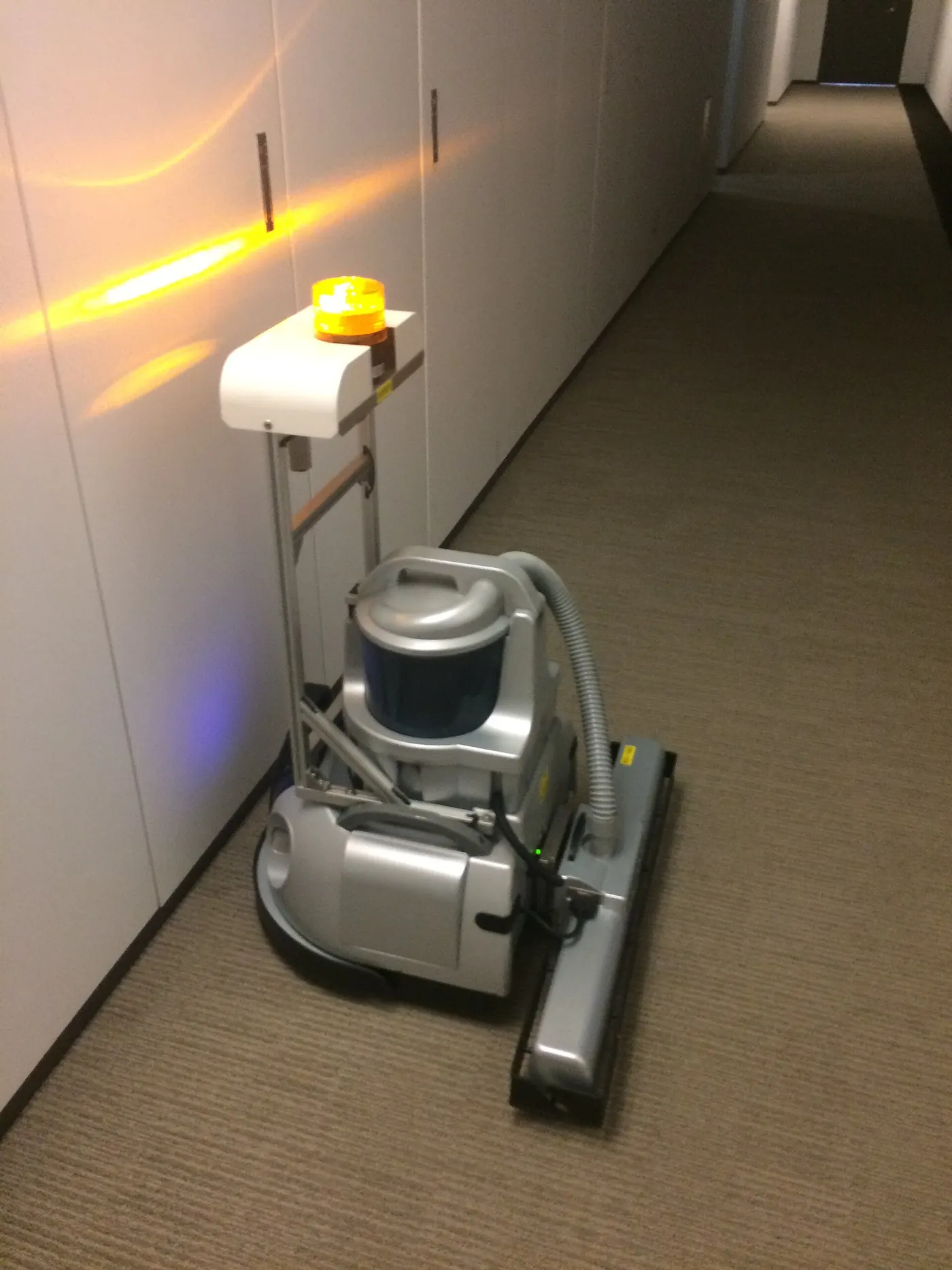
Three machine types are sold for the same job and they fail in different places. A robot handles open floor and gives up at thresholds and cables. A cordless stick handles everything and runs out of battery. A canister never runs out and never gets carried upstairs twice.
This guide matches each to the floor plan and floor type it actually suits, then shows what the published specification can and cannot tell you. Nothing here has been tested, bought or supplied; the figures are arithmetic and public regulation, both sourced below.
Start with the floors, then the floor plan
Hard floors and deep carpet ask for opposite things. On hard floors the work is picking up grit and fine dust without flinging it, which a soft roller and good sealing do better than raw airflow. On carpet the work is agitating fibres to release what has settled into them, which needs a driven brush bar and enough power to keep it turning under load.
The floor plan then decides the format. A single-level home with open floor and few thresholds is where a robot does its best work. A home on three levels with stairs is where a canister or a stick wins, because carrying is the dominant cost and a robot cannot do it.
Canadian winters add a third variable that the box never mentions: grit and road salt tracked in from October to April. That is abrasive material, and it favours a machine whose brush bar and filter can be removed and cleaned without tools.
| Home | Floors | Best fit | Where it fails |
|---|---|---|---|
| One level, open plan | Mostly hard floor | Robot, with a stick for edges | Thresholds, cables, dark rugs |
| One level, many small rooms | Mixed | Cordless stick | Run time on the high setting |
| Two or three levels | Mixed | Cordless stick per level, or a canister | Carrying a canister up stairs |
| Any size, deep carpet | Carpet throughout | Canister or upright with a driven brush | Weight and cable management |
| Apartment under 60 m² | Hard floor | Cordless stick | Dock and storage space |
Format first, model second. Nearly every complaint about a vacuum turns out to be a mismatch in this table rather than a fault in the machine.
Run time is a distance budget in disguise
A cordless stick's run time is quoted on its lowest power setting, which is rarely the setting you use on carpet or on tracked-in grit. Treat the quoted figure as a ceiling and plan against the high-power figure in the same specification table, which is usually a third of it.
Convert the home into minutes rather than comparing minutes between machines. At a working rate of about 3 m² a minute — a planning assumption used throughout this guide, allowing for furniture and turns rather than an open-floor sprint — a 50 m² apartment needs about 17 minutes and a 200 m² house about 67 minutes.
That arithmetic settles the format argument quickly. If a home needs 47 minutes and the machine delivers 15 minutes at the power setting the carpet requires, it is a machine for one room rather than for the house, whatever the box says.
| Floor area | Minutes of actual running | What that rules out |
|---|---|---|
| 50 m² | 17 minutes | Nothing, most sticks manage this |
| 90 m² | 30 minutes | Sticks under 30 minutes at working power |
| 140 m² | 47 minutes | Most single-battery sticks |
| 200 m² | 67 minutes | Anything without a second battery or a cord |
Each figure is the floor area divided by 3 m² a minute and rounded up. The 3 m² rate is an assumption made here to show the method; time one room of your own to replace it.
There is no energy label on a vacuum in Canada
EnerGuide does not cover vacuums. Natural Resources Canada makes the EnerGuide label mandatory for eight appliance categories — clothes dryers, clothes washers, dishwashers, freezers, electric ranges, cooktops and ovens, integrated washer-dryers, refrigerators and refrigerator-freezers, and room air conditioners — and voluntary for five heating and water-heating categories. Vacuums appear in neither list.
ENERGY STAR does not cover them either. Natural Resources Canada's certified-product listing names appliances, electronics and office equipment, heating and cooling, lighting and fans, data centres, water heaters, windows and doors, and states that more than 80 product types are eligible. There is no vacuum category among them.
So there is no published efficiency comparison to read, and the only energy figure available is the rated power on the machine's own plate. The running-energy calculator on this site works from that number and your own electricity rate, which is the only route to a real figure.
What a suction number does and does not prove
Suction is published in at least three incompatible ways — air watts, pascals and kilopascals — and a figure in one unit cannot be compared against a figure in another. Worse, peak suction at the motor tells you nothing about suction at the floor head, which is where sealing, filter loading and brush design take their cut.
The Competition Bureau's guidance on deceptive marketing practices is the relevant backstop. Its instruction on performance claims is blunt: do not make one unless you can prove it, even if you think it is accurate, and testimonials usually do not amount to adequate proof.
The practical reading rule follows from that. A number published with the test method and unit beside it is evidence. A number published alone, or a comparison against an unnamed competitor, is a claim the Competition Act expects to be supportable, and the absence of a method is the thing to notice.
- Compare only figures in the same unit, from the same manufacturer's own specification page
- Prefer a figure measured at the floor head over one measured at the motor
- Treat a suction number with no stated test method as unsupported
- Check whether the figure is peak or sustained, since a full bin changes both
- Ignore comparisons against an unnamed competitor entirely
Filters, and the air you are actually trying to clean
Health Canada's guidance on fine particulate matter in residential indoor air sets no maximum limit, stating instead that indoor levels of PM2.5 should be kept as low as possible because there is no apparent threshold for its health effects. It reports that average indoor concentrations measured in Canadian homes were less than 15 µg/m³ in homes without smokers and less than 35 µg/m³ in homes with smokers.
On air cleaning it is careful rather than enthusiastic: some in-duct filters or portable air cleaners with filters may help reduce indoor PM2.5, but filter efficiency is highly variable among products. The guidance's main recommendations are source control and ventilation, and it does not list vacuuming among its measures at all.
The honest conclusion for a vacuum buyer is narrower than the marketing. A well-sealed machine with a filter that is actually serviced stops recirculating what it picks up, which is a real benefit to the person pushing it. It is not an air purifier, and no vacuum sold in Canada carries a published figure saying otherwise.
Before you buy
- Write down the floor types in each room before looking at any machine
- Count the thresholds, cables and level changes a robot would have to deal with
- Measure the floor area and convert it to minutes at about 3 m² a minute
- Read the run time at the high power setting, not the quoted maximum
- Confirm the brush bar and filter come out without tools
- Compare suction figures only in the same unit and only with a stated method
- Check what the filter costs and how often it is replaced before you buy
Questions readers ask
- Can a robot replace a stick vacuum entirely?
- In a single-level home with hard floors, few thresholds and tidy cables, close to it. Everywhere else it covers the daily maintenance and leaves the edges, stairs, upholstery and anything above floor level. The common arrangement is a robot running most days and a stick used weekly for the 10% to 20% of the floor it cannot reach.
- Is a bagged or bagless machine better for dust?
- Bagged machines keep the dust contained when you empty them, which matters to anyone sensitive to what a bagless bin releases at the bin. Bagless machines have no consumable bag cost, which on the running-cost guide on this site is $40 a year or more. The filter servicing matters more than the choice between them.
- How much floor can a robot cover on one charge?
- Published coverage figures assume open floor, so apply the same 3 m² a minute planning rate used in this guide and compare it against the robot's quoted run time rather than its quoted area. A robot that runs 90 minutes covers roughly 270 m² of open floor, which in a furnished 120 m² home usually means one complete pass with recharging in between.
- Does more suction mean a cleaner carpet?
- Only up to the point where the brush bar stops turning under load. On carpet, agitation releases what suction then removes, so a machine with a driven brush and moderate airflow out-cleans a machine with high airflow and no brush. On hard floors the opposite holds and sealing matters more than either.
Sources
- Natural Resources Canada — EnerGuide label for appliances and room air conditioners (mandatory and voluntary categories; vacuums in neither) — checked 2026-11-03
- Natural Resources Canada — list of ENERGY STAR certified product categories (more than 80 eligible product types; no vacuum category) — checked 2026-11-03
- Competition Bureau Canada — false or misleading representations and deceptive marketing practices, including performance claims — checked 2026-11-03
- Health Canada — guidance for fine particulate matter (PM2.5) in residential indoor air — checked 2026-11-03
Some links on this site can earn us a commission. That does not change which product a guide recommends, and it adds nothing to your price. Advertising is not enabled on this site yet. When it is, ads will be labelled and kept visually separate from the guides.